

What Is a Valance? Window Treatment Styles Explained
A valance is a short window treatment that runs across the top of a window. It can be soft and gathered, crisp and tailored, or built from wood and fabric. It may sit alone above a blind or shade, or finish a set of curtains. Because it covers the top few inches of the window, a valance changes proportion, hides hardware, and adds a layer of color without blocking much light. That small footprint makes it useful in rooms where full curtains feel heavy or impractical. It also makes the details matter: the style, drop, and mounting height decide whether the result looks polished or fussy.
Valances, Pelmets, and Cornices: What’s the Difference?
People often use “valance” as a catch-all for anything that sits across the top of a window. In practice, the word covers a family of treatments, and the differences affect both look and function.
A valance is usually fabric. It can be pleated, gathered, straight, or shaped, and it is often mounted on a rod or a concealed board. Soft valances are the most relaxed option and work well over blinds, shades, and curtains.
A pelmet is a term you will see more often in British decorating. It usually describes a stiffened fabric box or a fabric-covered frame. Pelmets tend to look more architectural than soft valances, and they are good at concealing a roller blind, a curtain track, or an uneven ceiling line.
A cornice is a hard top treatment, typically a wooden or upholstered box that projects from the wall. It can be painted, stained, or covered in fabric. Because it has a fixed shape, a cornice gives a room a crisp, built-in feel. It is also practical above a Roman blind or a pair of curtains where you want the hardware to disappear.
You may also come across swags, lambrequins, and stagecoach valances. These are more decorative versions of the same idea: a top treatment that frames the window and adds a deliberate layer above the glass. They can be beautiful, but they demand more careful proportioning than a simple tailored valance.
The Main Valance Styles and Where They Work Best
The style you choose should follow the job you want the valance to do. A treatment that hides a bulky curtain track is not the same as one that simply adds softness above a café curtain.
- Tailored or box-pleat valance: Clean, structured, and easy to live with. It suits traditional and modern rooms, especially above Roman blinds or curtains in a home office, dining room, or bedroom.
- Gathered valance: Softer and more informal, with fabric pulled onto a rod. It works well in kitchens, breakfast nooks, and small bedrooms where a relaxed look is welcome.
- Balloon valance: Rounded and voluminous, with gathered sections that create a cushioned shape. Use it sparingly; it can overwhelm a small window or a low ceiling.
- Roman valance: A flat fabric panel that echoes a Roman shade. It is a neat choice when you want the top treatment to relate to the window covering below rather than compete with it.
- Swag or lambrequin: Draped and decorative, often with side tails or cascades. It suits formal rooms and windows with enough height to carry the extra visual weight.
- Hard cornice or upholstered box: Crisp and architectural, useful for hiding hardware and adding a finished edge. It works particularly well in contemporary rooms, above wide windows, or where fabric valances would look too soft.
There is also the stagecoach valance, a shaped fabric top treatment with scalloped or pointed edges. It can look charming in a cottage or a child’s room, but it is less forgiving in a formal space. If you are unsure, start with a simple tailored shape. It is easier to adjust the fabric and color than to tone down an elaborate silhouette.
What a Valance Does Well
A valance earns its place when the top of the window is the problem. Maybe the curtain track is visible, the roller blind is plain, or the wall above the window feels bare. A valance can solve those issues without asking you to give up daylight.
- It hides hardware. Rods, brackets, tracks, and the top of a blind disappear behind a clean line of fabric or a cornice.
- It adds color and pattern. The top of a window is a natural focal point. A valance can carry a fabric repeat or a strong color where a full curtain would feel excessive.
- It softens hard edges. Blinds and shades can look severe against a bare wall. A valance brings warmth and texture to the window frame.
- It can improve proportion. A well-placed valance can make a window feel wider or more finished, especially when it extends beyond the frame.
- It uses less fabric than full curtains. That makes it a practical way to add a decorative layer without covering the whole window.
Keep in mind that a valance is not a light-blocking treatment on its own. It frames the window and hides the top edge, but it will not darken a bedroom or stop a draft. For privacy or light control, pair it with a blind, shade, or curtain that does the real work.
Where Valances Fall Short
A valance can be elegant, but it is not automatic. The wrong drop, color, or shape can make a window look shorter, heavier, or dated.
- They can shorten a window. A deep, dark valance draws the eye downward. In a room with low ceilings, choose a shallow drop and a color close to the wall.
- They collect dust. Fabric valances and upholstered cornices need vacuuming or brushing. In a kitchen, choose a washable fabric or a hard cornice that wipes clean.
- They can fight with art and pattern. A busy valance above a busy wallpaper or a gallery wall can feel crowded. Let one element lead.
- They are not ideal for every window. Arched windows, very small windows, and windows with a prized view often look better with a simpler treatment.
- They can look dated if proportions are off. A valance that is too short, too deep, or mounted in the wrong place can feel like an afterthought.
How to Choose a Valance for Your Window
Start with the practical job, then choose the decoration. This order keeps you from falling for a style that does not fit the window.
- Identify the problem. Are you hiding a curtain track, adding color, softening a blind, or finishing a doorway? Each goal points to a different depth and shape.
- Choose the companion treatment. A valance over a Roman blind needs different clearance than one over curtains. Make sure the layers can move without rubbing.
- Match the architecture. A tailored valance suits clean-lined rooms; a gathered valance feels at home in casual spaces. A cornice can give a modern window a built-in look.
- Pick the fabric with care. Medium-weight fabrics hold pleats well. Sheer fabrics need more fullness and lining. In sunny rooms, a lining protects the fabric and gives the valance body.
- Set the drop. For many standard windows, a finished drop of roughly 8 to 12 inches works, but tall windows can carry more. The valance should cover the hardware, not swallow the glass.
- Make a mock-up. Cut a paper or cardboard template and tape it above the window. Stand back. This simple step reveals whether the proportion feels right before you commit to fabric.
Measuring and Placement Tips
Measure the width of the window frame, then decide how far the valance should extend beyond it. A little extra width can make a narrow window feel more generous, but too much can look like a shelf. For a tailored valance, add enough fabric for pleats and returns; for a gathered style, allow extra fullness so the fabric does not look stretched.
Mounting height matters as much as drop. Mounting at the ceiling can make a window feel taller, while mounting just above the frame keeps the treatment close to the architecture. If you have crown molding, a cornice can run into it or stop below it; decide before you order. Check clearance for blind cords, cranks, handles, and anything that needs to open. A valance that blocks a window’s operation is a daily annoyance.
Finally, consider the view from outside. A valance is visible through the glass during the day, so choose a lining and backing that look tidy from the street. This is especially true for a window near a front door or in a room where curtains are often left open.
When a Valance Is the Right Choice
Choose a valance when you want to finish the top of a window without covering it. It is a good fit above a Roman blind, a roller shade, or a pair of curtains that need a polished edge. It is also useful in kitchens, bathrooms, and small rooms where full curtains would feel bulky. Skip it when the window is already architecturally strong, when the ceiling is low and the valance would be deep, or when the view deserves to stay unobstructed. If the proportions are right, a valance does its job quietly: it hides what should be hidden, adds a little color, and makes the window feel complete.
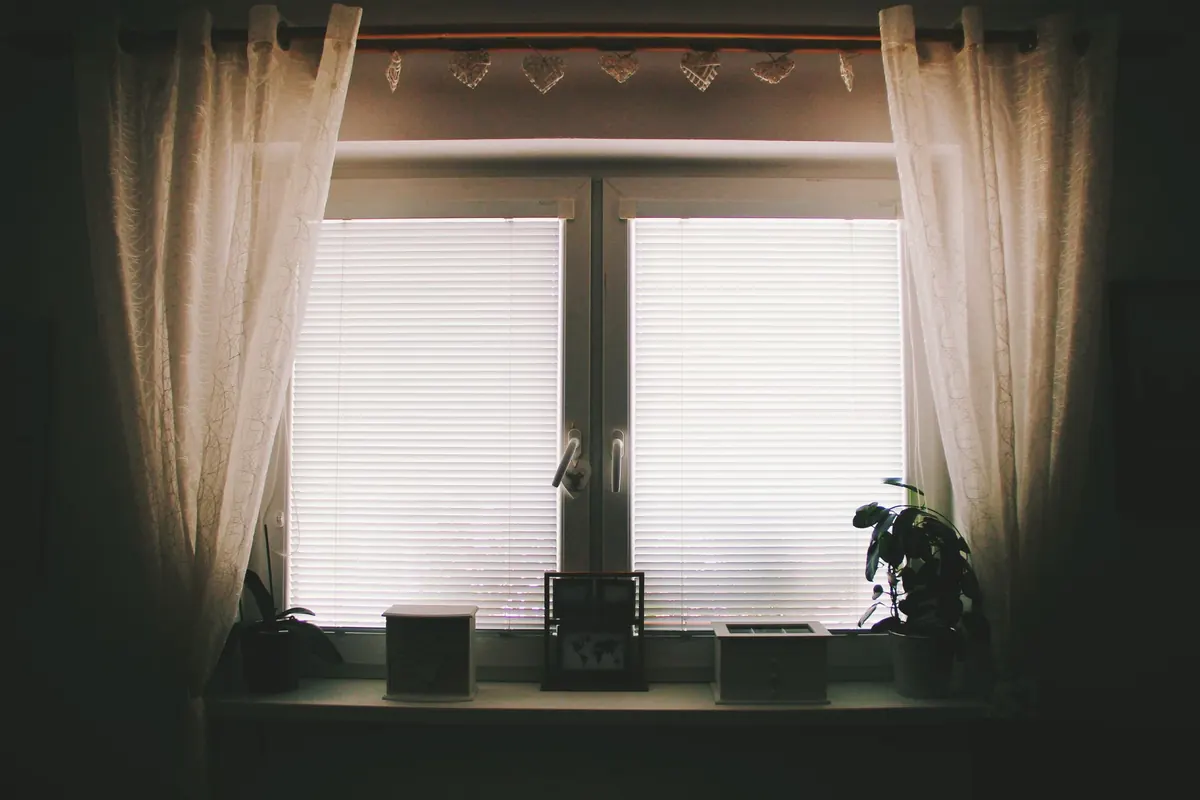
Photo: Dominika Gregušová / Pexels